

.png)

SUSTAINABLE
STORAGE
STORAGE

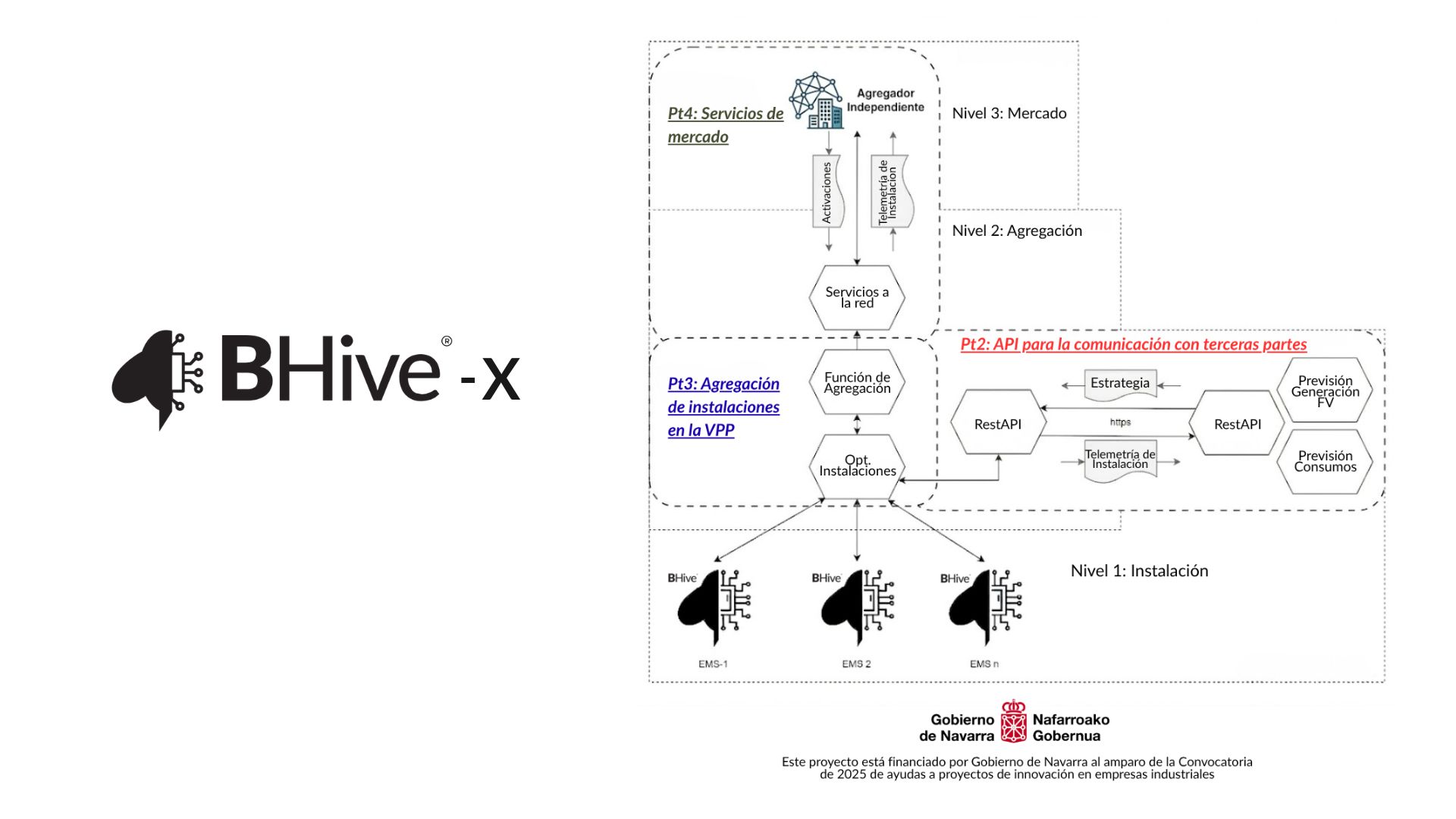
One of the most significant breakthroughs in this phase has been the validation of the new facility-level energy management optimizer. Comparative analyses conducted on a standard BeePlanet installation demonstrate that the developed strategy reduces energy costs compared to conventional management approaches. These results, based on real-world data, allow us to estimate the economic value that BHive X can provide to industrial companies that incorporate storage into their facilities.
The developed communications architecture, based on MQTT protocols and a cloud control API, has passed real-world client testing, ensuring link availability of over 95% at the aggregation node. This level of availability is a necessary condition for meeting the real-time requirements demanded by power system control centers.
Se analizan varios modelos regresivos como XGB, Random Forest o redes neuronales y se aplica el que mejor resultados tiene para cada instalación, demostrando la capacidad de predecir el consumo y la generación renovable con una resolución operativa de 15 minutos. Esta capacidad predictiva permite optimizar los ciclos de carga y descarga de las baterías en función de las condiciones del mercado, mejorando tanto el rendimiento económico como la utilidad de red de los sistemas
The platform incorporates a Zero Trust architecture implemented via mTLS and X.509 digital certificates, ensuring that 100% of communications are encrypted using TLS protocols. This security layer eliminates the risk of identity spoofing in remote battery control, a critical requirement for operating distributed assets in the electricity market.


.png)


